
Why AI Agents Need Runtime Security, Not Just Access Controls
Securelytix Team
Product & Security
2 July 2026
AI agents don't just access data they reason, make decisions, call APIs, and move information across systems. While traditional access controls determine what an agent can access, they don't govern what happens after authorization. This article explores why runtime security is becoming a critical layer for securing autonomous AI systems through continuous visibility, real-time policy enforcement, and data-centric protection.
For years, enterprise security has focused on a simple question:
Who should have access to what?
Identity management, role-based access controls, privileged access management, and zero-trust architectures have all been built around controlling access to systems and data.
But the rise of AI agents is changing that equation.
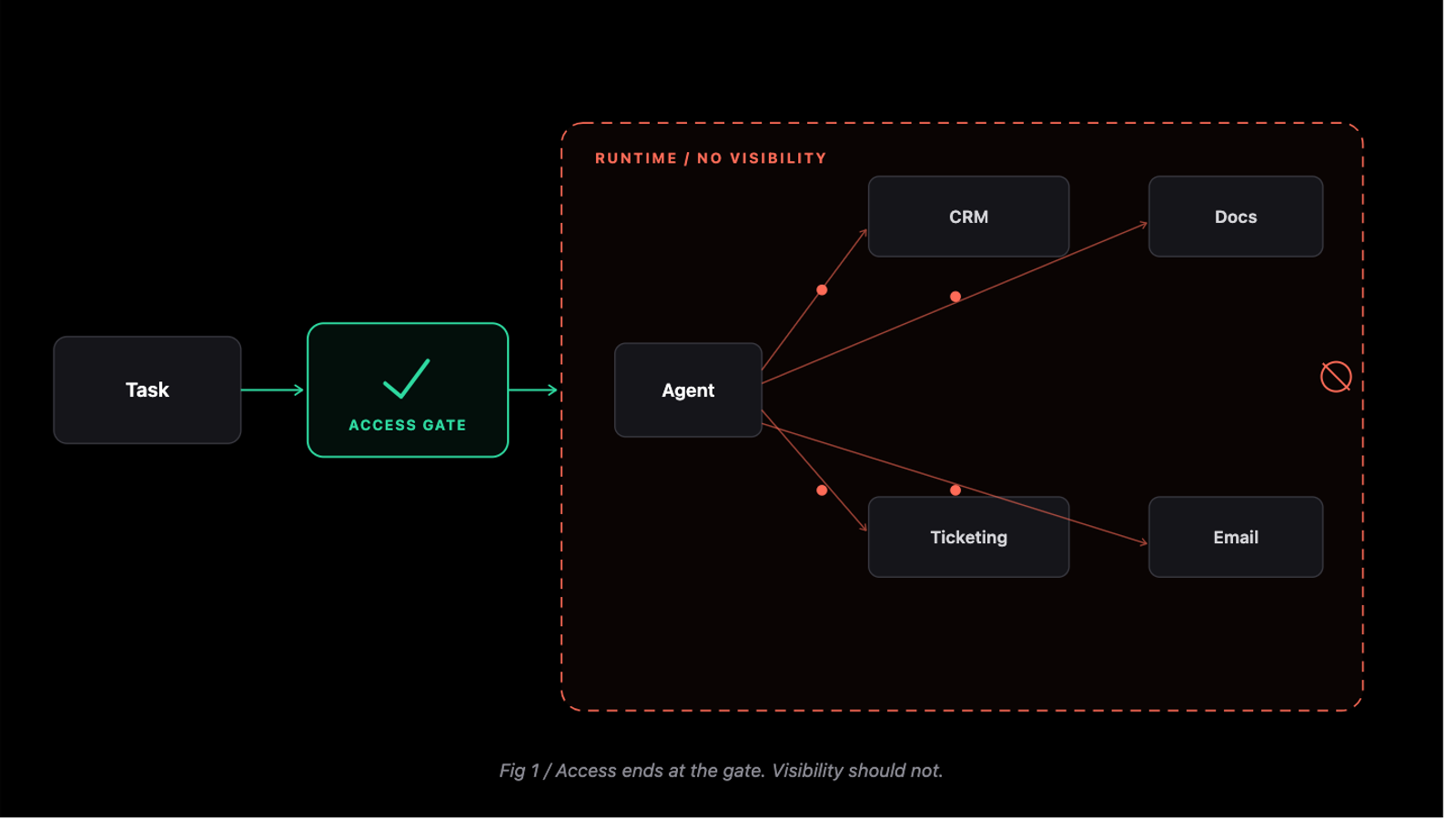
Unlike traditional software, AI agents don't just retrieve information or execute predefined workflows. They reason, plan, make decisions, interact with multiple systems, and perform actions on behalf of users. An AI agent might query a CRM, access a knowledge base, retrieve customer information, call an external API, update a ticketing system, and trigger a workflow all within a single task.
The challenge is that once access is granted, organizations often lose visibility into what happens next.
This is where traditional security models begin to fall short.
The question is no longer just:
"Can this agent access the data?"
The more important question is:
"What is the agent doing with that data while it operates?"
As enterprises accelerate the adoption of agentic AI, runtime security is emerging as a critical layer of defense one that complements access controls rather than replacing them.
Access Controls Were Designed for Predictable Systems
Traditional security architectures assume predictable behavior.
A user receives permissions based on their role. An application accesses a defined set of resources. Security teams establish policies that govern what systems can interact with one another.
These controls work because the actions performed by users and applications are largely deterministic.
If a customer support representative has access to a CRM system, security teams can reasonably predict how that access will be used. If a service account connects to a database, its actions typically follow a predefined workflow.
AI agents operate differently.
They are designed to make decisions dynamically based on goals, context, and available tools. Rather than following a fixed path, agents continuously evaluate information, select actions, and adapt their behavior as conditions change.
This shift introduces a new challenge for security teams.
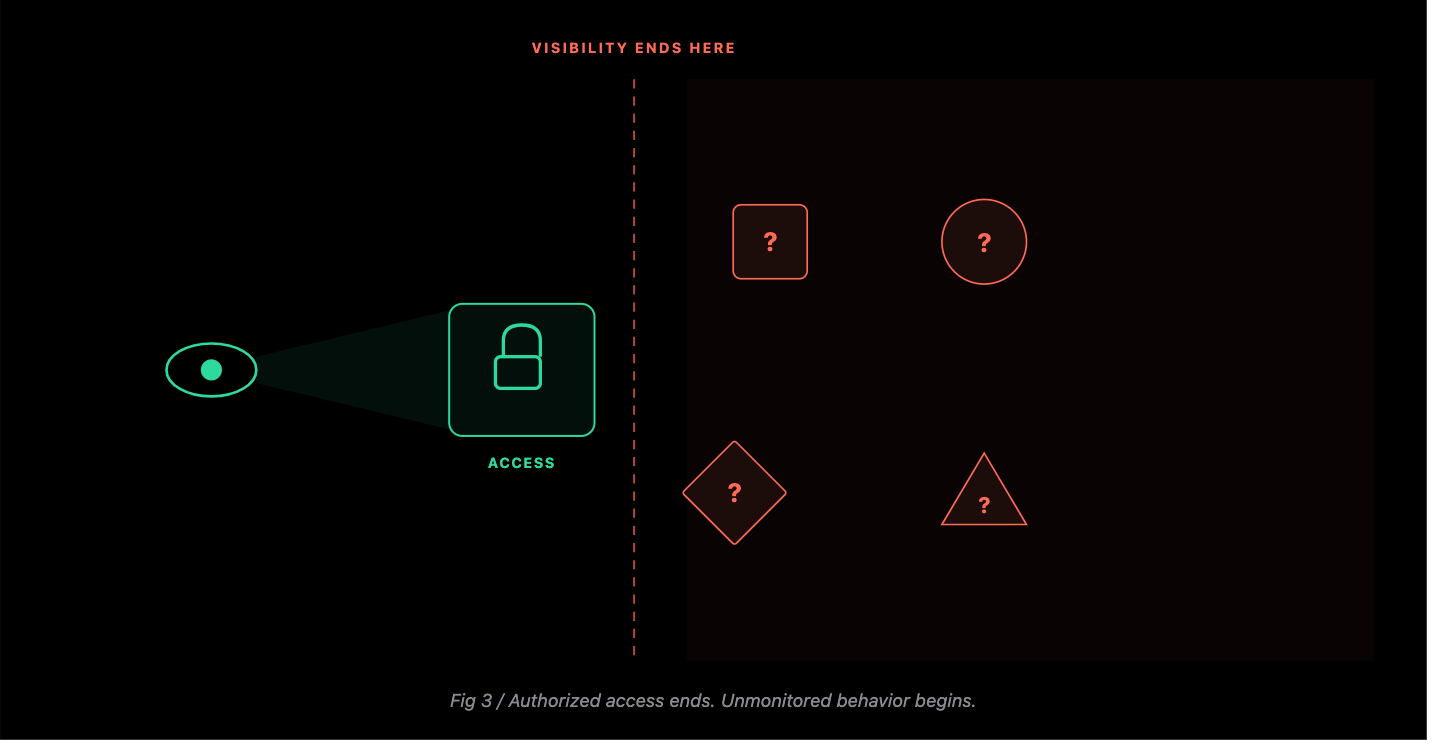
An agent may have legitimate access to a system, yet still perform actions that create security, privacy, or compliance risks. The issue is not unauthorized access, it is unintended behavior occurring after authorization has already been granted.
In other words, access control answers the question of who can enter the building.
Runtime security answers the question of what happens once they are inside.
Why AI Agents Need Runtime Security, Not Just Access Controls
The security challenges introduced by AI agents are fundamentally different from those posed by traditional applications.
A conventional application follows predefined rules. If it is granted access to a database, security teams generally know what queries it will run and what actions it will perform.
AI agents operate with significantly more autonomy.
Modern agents can interact with multiple systems, call external APIs, retrieve information from knowledge bases, access enterprise applications, and execute actions across workflows. Rather than following a fixed path, they determine the next step based on context and objectives.
This creates a new category of risk.
An AI agent may have perfectly legitimate access to a system, yet still expose sensitive information, misuse a connected tool, or perform actions that violate security policies.
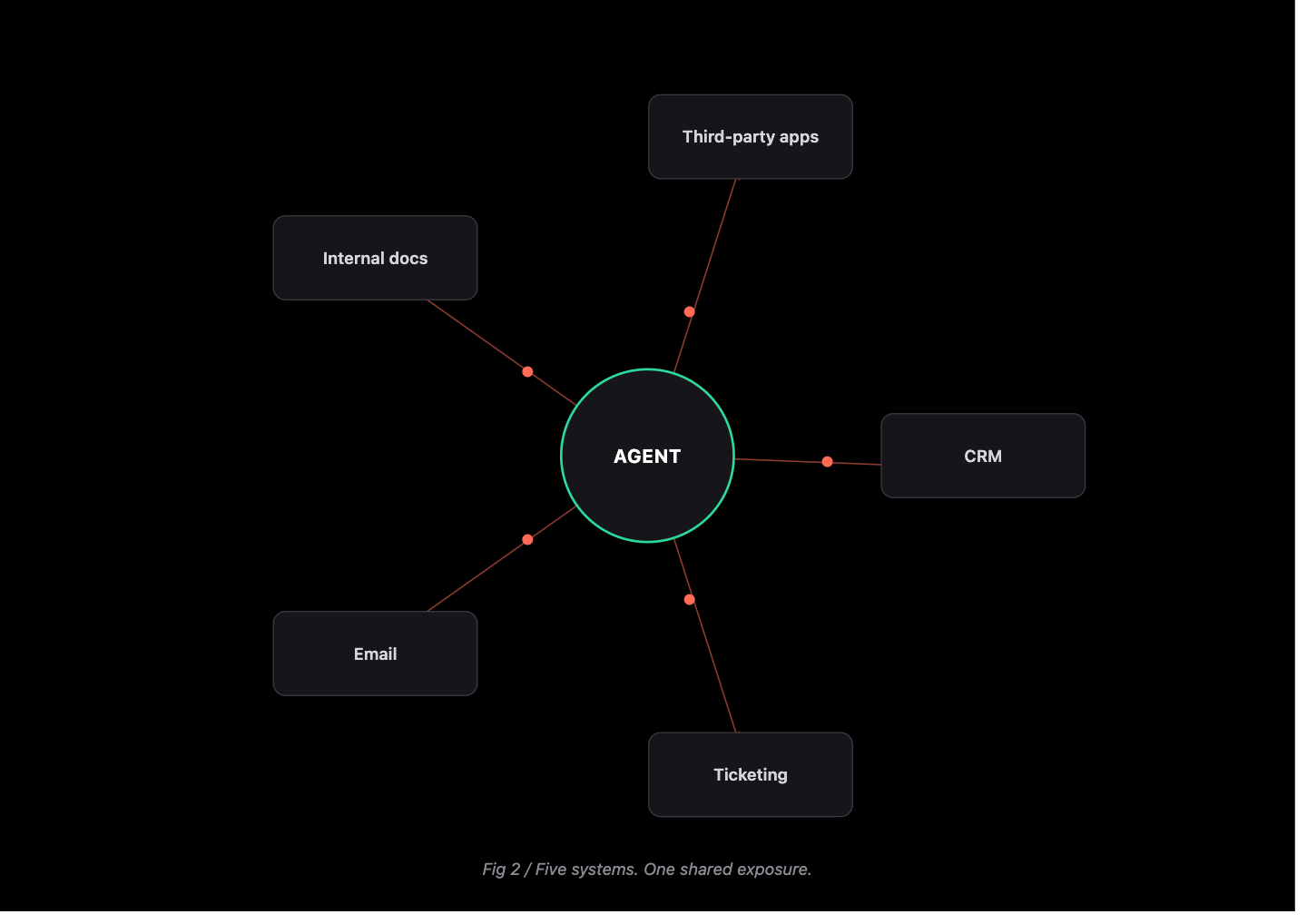
Consider a customer support agent connected to:
- A CRM platform
- Internal documentation
- Ticketing systems
- Email services
- Third-party applications
Each integration expands the agent's capabilities. It also expands the organization's attack surface.
The challenge is that most security controls focus on granting or denying access at the start of the interaction. They rarely monitor how data moves between systems once the agent begins operating.
As a result, organizations can find themselves in situations where an agent is technically compliant with access policies while simultaneously creating significant security risks.
This is why runtime security is becoming increasingly important.
Runtime security focuses on monitoring, validating, and controlling agent behavior while tasks are being executed. Instead of asking only whether an agent should have access, runtime security continuously evaluates what the agent is doing with that access.
For AI agents, the security question is no longer static.
It is dynamic, continuous, and context dependent.
Why Access Controls Alone Are No Longer Enough
Access controls remain an essential security layer. However, they were never designed to manage autonomous decision-making systems.
Imagine granting an employee access to a customer database.
Access controls can determine whether that employee can log in.
They cannot determine:
- Which records they access during a session
- Whether information is copied elsewhere
- Whether sensitive data is shared unnecessarily
- Whether actions align with business policies
The same principle applies to AI agents.
An agent may be authorized to access multiple systems, yet unintended outcomes can still occur during execution:
- Sensitive customer information may be exposed through tool outputs.
- Excessive data may be retrieved when only a small subset is needed.
- Information from different systems may be combined in unexpected ways.
- External tools may receive data they were never intended to process.
In each case, access controls function exactly as intended.
The failure occurs during runtime.
As enterprises deploy increasingly autonomous AI systems, security strategies must evolve beyond static permissions and begin addressing behavior, context, and real-time decision making.
Building Runtime Security for the Age of AI Agents
As organizations adopt AI agents across customer support, operations, development, and business workflows, security strategies must evolve alongside them.
The goal is not to restrict innovation. It is to ensure that autonomous systems operate within clearly defined security and governance boundaries.
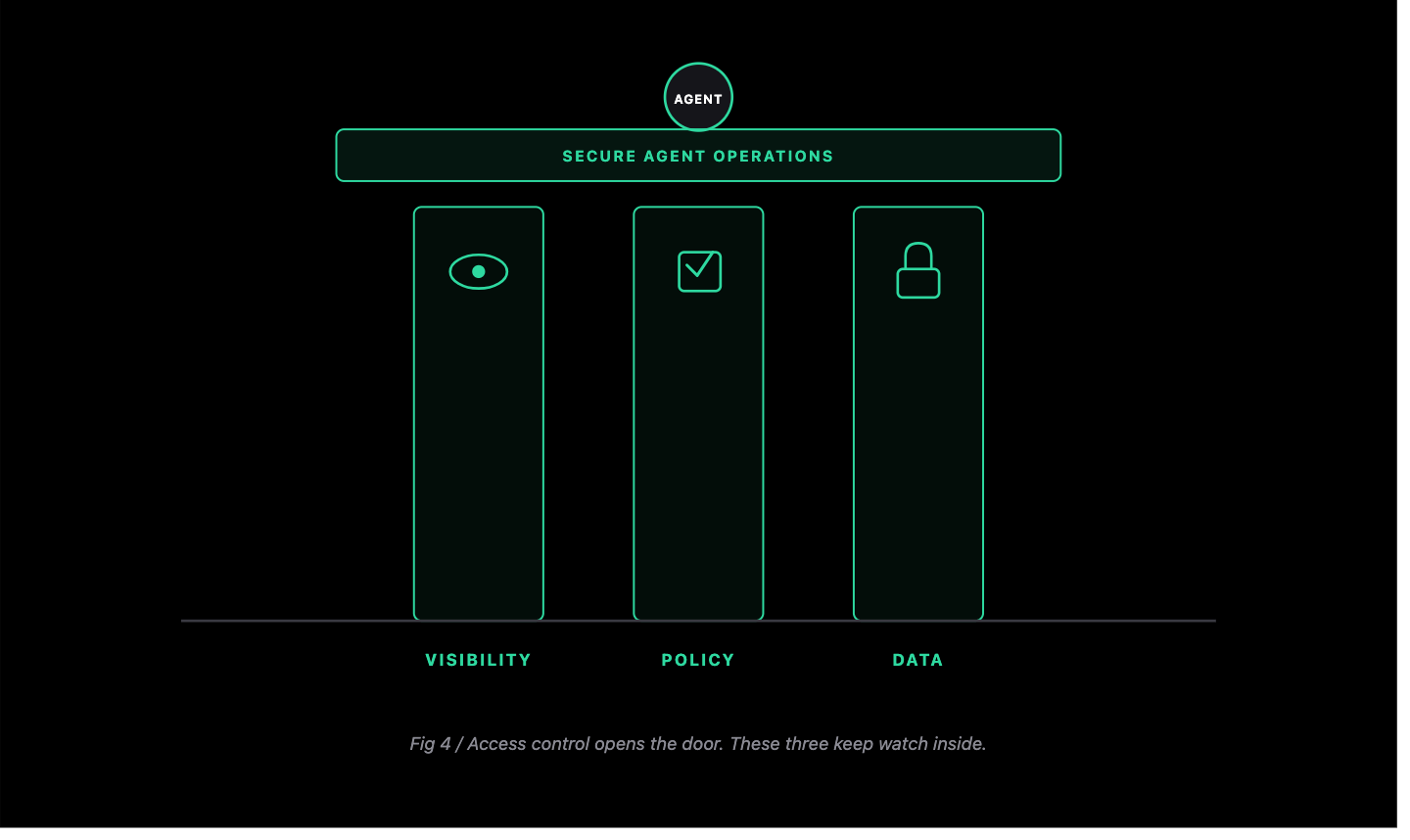
A strong runtime security framework typically rests on three key pillars.
1. Continuous Visibility
Organizations cannot protect what they cannot see.
Security teams need visibility into how agents interact with data, tools, APIs, and enterprise systems throughout their lifecycle. This includes understanding what information is being accessed, which actions are being executed, and where sensitive data is moving.
Without this visibility, security teams are left relying on assumptions rather than evidence.
2. Real-Time Policy Enforcement
Traditional security policies are often evaluated before access is granted.
AI agents require policies that remain active during execution.
For example, an agent may be authorized to access customer records but should only retrieve the specific information required to complete a task. Similarly, an agent interacting with external services should be prevented from transmitting sensitive data beyond approved boundaries.
Runtime policy enforcement helps ensure that agent behavior remains aligned with organizational security, privacy, and compliance requirements.
3. Data-Centric Protection
In an agentic environment, protecting systems alone is no longer enough.
Organizations must focus on protecting the data itself.
This includes implementing data classification, masking sensitive information where appropriate, minimizing unnecessary data exposure, and maintaining clear audit trails of how information is accessed and used.
By making data protection a core part of AI workflows, organizations can reduce risk without limiting the effectiveness of their agents.
What Secure AI Architectures Should Prioritize
As agentic AI continues to evolve, organizations should focus on a few foundational principles:
- Least-Privilege Access: Agents should only have access to the tools and data necessary for a specific task.
- Data Minimization: Only the minimum amount of information required should be retrieved and processed.
- Continuous Monitoring: Agent activity should be observable and auditable in real time.
- Policy-Based Governance: Security controls should adapt dynamically based on context and risk.
- Comprehensive Auditability: Every action, decision, and data interaction should be traceable.
Together, these principles create a security model that is better suited to autonomous systems than traditional access controls alone.
The Next Frontier of AI Security
AI agents are transforming how organizations interact with data, automate workflows, and deliver business outcomes.
However, as these systems become more capable, the security conversation must evolve.
Access controls remain an essential first line of defense. They determine what an agent can access and establish the boundaries within which it operates.
But access control alone cannot address the risks that emerge once an agent begins making decisions, interacting with tools, and moving data across systems.
That is where runtime security becomes critical.
Organizations that combine strong access controls with continuous visibility, real-time policy enforcement, and data-centric protection will be better positioned to harness the benefits of agentic AI without introducing unnecessary risk.
Because in the era of autonomous systems, security is no longer just about controlling access.
It's about understanding and securing what happens after access is granted.
Frequently Asked Questions
What is runtime security for AI agents?
Runtime security is the continuous monitoring and enforcement of security policies while an AI agent is actively performing tasks. Unlike traditional access controls that decide whether an agent can access a system, runtime security ensures the agent uses that access safely, prevents sensitive data exposure, and detects risky behavior in real time.
Why aren't access controls enough to secure AI agents?
Access controls determine who or what can access a resource, but they don't monitor what happens after access is granted. AI agents can reason, make decisions, call APIs, retrieve data from multiple systems, and execute workflows autonomously. Even with legitimate permissions, they may unintentionally expose sensitive information, retrieve excessive data, or interact with external tools in ways that violate security or compliance policies. Runtime security addresses these risks by monitoring agent behavior throughout execution.
What are the biggest security risks associated with AI agents?
Some of the most common security risks associated with AI agents include the exposure of sensitive data such as PII and PHI, excessive retrieval of enterprise information beyond what is required, prompt injection and indirect prompt injection attacks, unauthorized use of connected tools or APIs, and the leakage of data to third-party LLMs or external services. Organizations also often struggle with limited visibility into an agent's actions and decision-making process, making it difficult to detect misuse or investigate incidents. In addition, autonomous workflows can inadvertently violate security, privacy, or regulatory compliance requirements. As AI agents become more autonomous and capable, these risks become increasingly dynamic, making continuous monitoring and runtime security essential.
What should organizations prioritize when securing AI agents?
A comprehensive AI security strategy should combine multiple layers of protection rather than relying on access controls alone. This includes implementing least-privilege access so agents can only reach the data and tools they genuinely need, continuously monitoring agent behavior in real time, and enforcing security policies throughout execution to prevent risky or unauthorized actions. Organizations should also adopt a data-centric approach by classifying, masking, and redacting sensitive information wherever appropriate, while maintaining comprehensive audit logs that capture every decision, action, and data interaction. Together, these capabilities enable organizations to deploy AI agents securely, maintain compliance, and reduce risk without limiting the agents' effectiveness.
Ready to Secure Sensitive Data?
Explore how Securelytix helps teams protect sensitive data, enforce privacy controls, and build Secure AI deployment.