
Raw PII: The Most Dangerous Technical Debt in Modern Systems
Securelytix Team
Product & Security
9 May 2026
Redefining Technical Debt
In the traditional engineering technical debt is often visualized as a complexity of legacy code, spaghetti-like dependencies, or outdated server configurations that slow down the velocity of feature delivery. However, a more insidious form of debt has emerged in the era of high-velocity data processing: Raw Personally Identifiable Information (PII). Unlike traditional debt, which primarily affects developer productivity, raw PII debt creates a systemic, silent liability that compounds exponentially as it flows through a modern architecture.
This blog explores why raw sensitive data is the most dangerous form of technical debt, how the rise of AI has exacerbated the problem, and why moving toward a tokenized-first architecture is the only sustainable way to pay down this debt.
The Anatomy of Data Sprawl
The danger of raw PII does not start from the initial act of collection. Every serious application requires user data to function. The debt begins the moment that data enters the system and starts to move. In a distributed system, data is rarely static. It migrates from the primary database into various side-channels, often without deliberate architectural oversight.
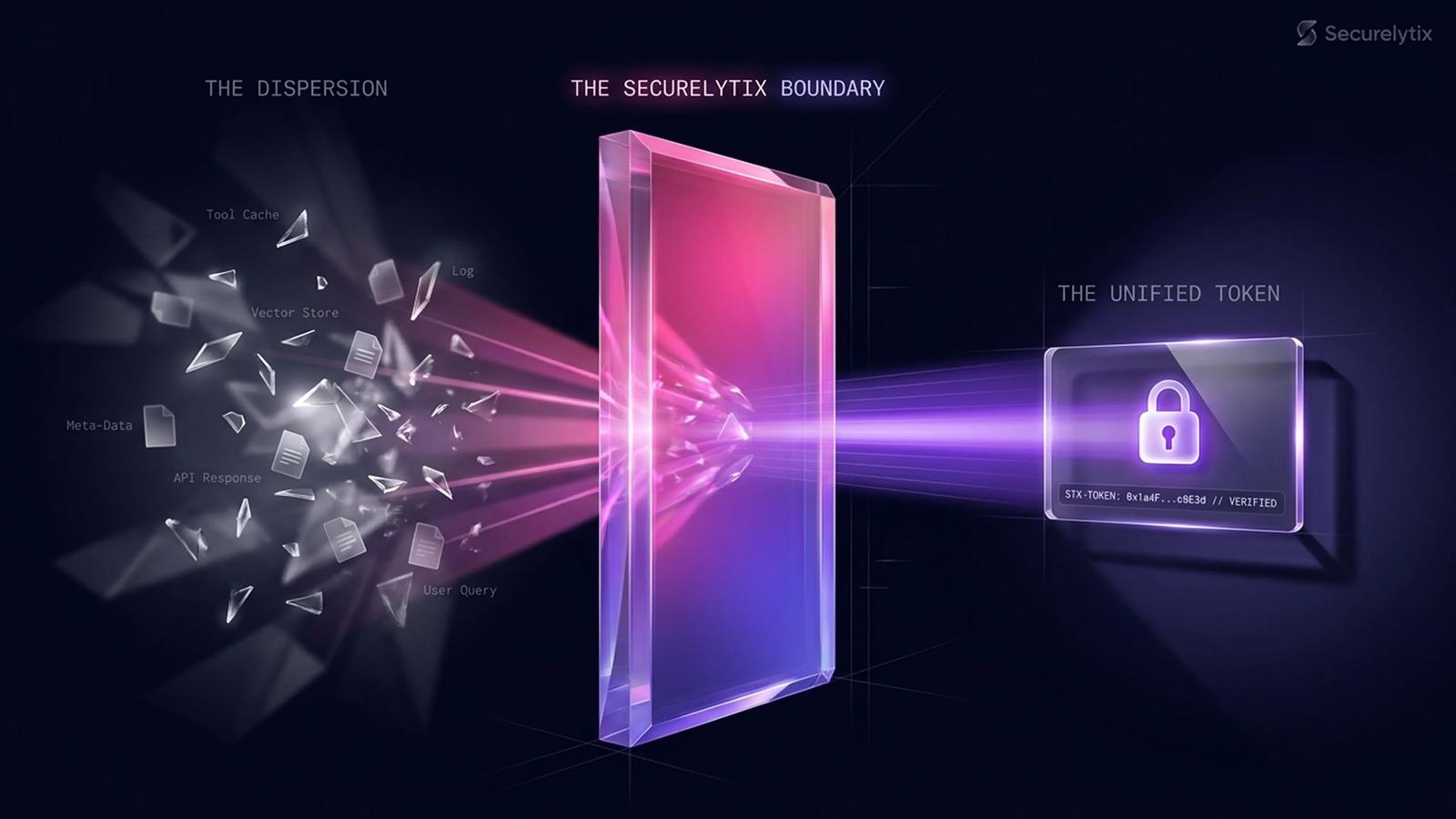
Consider the typical journey of a customer’s phone number or national ID. It might start in a PostgreSQL database, but within minutes, it has been replicated into an Elasticsearch cluster for search, a Redis cache for performance, and a Snowflake warehouse for business intelligence. More dangerously, it often ends up in application logs during a debugging session or in a Slack notification sent to a support engineer. Each of these 'hops' creates a new exposure surface - a new location where the data must be managed, protected, and eventually deleted.
Why AI and LLMs Have Broken the Perimeter
The shift from deterministic software to AI-driven systems has fundamentally changed how sensitive data moves. Traditional security models relied on a clear perimeter: data lived behind an API and a database firewall. AI-connected systems have shattered these boundaries by making data movement a core part of the application logic. (Read More - AI Era Systems & Tokenization)
In modern Retrieval-Augmented Generation (RAG) architectures, raw customer context is frequently fed into Large Language Models (LLMs) to generate personalized responses. If this context contains raw PII, that data is now traveling to external inference APIs, being stored in distributed tracing telemetry, and potentially becoming part of the model’s training or fine-tuning history. The dangerous part is not just the storage of this data, but its constant, high-frequency movement through untrusted or semi-trusted pipelines.
The Hidden Costs of Data Liability
While infrastructure costs are easily measured in dollars per month, data liability costs are often hidden until a crisis occurs. Raw PII increases operational complexity in three primary areas:
• Compliance Complexity: Under regulations like the DPDP Act or GDPR, organizations must provide clear answers on who accessed data and why. When raw data is spread across dozens of systems, answering these questions becomes a Herculean task.
• AI Governance: AI systems can unintentionally aggregate data from multiple sources to create a profile more sensitive than any individual source system, leading to systemic governance risks.
• Breach Economics: The financial fallout of a breach is determined by the volume of raw records accessible to an attacker. A system holding only tokens represents a manageable incident; a system holding raw PII represents a company-defining disaster.
Why Encryption Alone Fails
A common misconception is that 'encryption at rest' solves the PII problem. Encryption is essential, but it only protects the vault. The problem is what happens when the vault opens. The moment an application decrypts a field for use - to display it on a dashboard or send it to a service- the protection boundary disappears.
This decrypted 'cleartext' is what flows into logs, prompts, and telemetry. To truly solve the problem, we must move beyond protecting storage to protecting the flow. This requires an architectural shift where the application itself rarely, if ever, sees the raw sensitive value.(Read More - Tokenization Vs Encryption)
The Path Forward: Tokenized Architectures
The solution to raw PII debt is to make sensitive data operationally rare. In a tokenized architecture, raw values are replaced with opaque, randomly generated references (tokens) at the point of ingress. The actual sensitive data is stored in a secure, isolated vault.
By working with tokens instead of raw data, the majority of the infrastructure remains outside of the compliance scope and breach surface. Downstream services, analytics pipelines, and AI agents can perform their logic on tokens without ever being exposed to the liability of raw sensitive information. This architectural shift ensures that technical debt is managed at source, rather than being allowed to metastasize throughout the system.
Conclusion
Technical debt eventually gets collected - usually during a breach, an audit, or a compliance investigation. By treating raw PII as a dangerous liability and architecting for tokenization, organizations can build systems that are not only more secure but also more agile and resilient to the evolving regulatory landscape.
Frequently Asked Questions
What is raw PII?
Raw PII refers to unprotected sensitive personal information such as names, emails, phone numbers, national IDs, or health records stored in readable form inside systems.
How does AI increase PII risk?
AI systems and LLMs often process customer data across multiple services and external APIs, increasing the exposure surface for raw sensitive information.
Why is encryption alone not enough?
Encryption protects stored data, but once applications decrypt information for processing, raw data can still leak into logs, prompts, analytics tools, or third-party services.
What is a tokenized architecture?
A tokenized architecture replaces sensitive values with secure tokens, allowing applications and AI systems to operate without direct exposure to raw PII.
Ready to Secure Sensitive Data?
Explore how Securelytix helps teams protect sensitive data, enforce privacy controls, and build Secure AI deployment.