
What Is Data Residency? Meaning, Importance, Benefits, and Examples
Data residency refers to the geographical location where an organisation's data is stored. Understand how it impacts data privacy, security, regulatory requirements, cloud infrastructure, and business operations.
By Securelytix

Introduction
Today, businesses store large amounts of data across cloud platforms, applications, databases, and third-party services. This data may include customer names, email addresses, payment details, financial records, and other sensitive personal information.
But have you ever wondered where all this data is actually stored?
A company may operate in India but use cloud servers located in Singapore, the United States, or Europe. This raises an important question: Does the physical location of data matter?
Yes, it does. Different countries have different data protection laws and regulations that govern how personal information is stored, processed, and transferred.
This is where data residency becomes important. It helps businesses understand where their data is physically stored and what rules may apply to it.
What Is Data Residency?
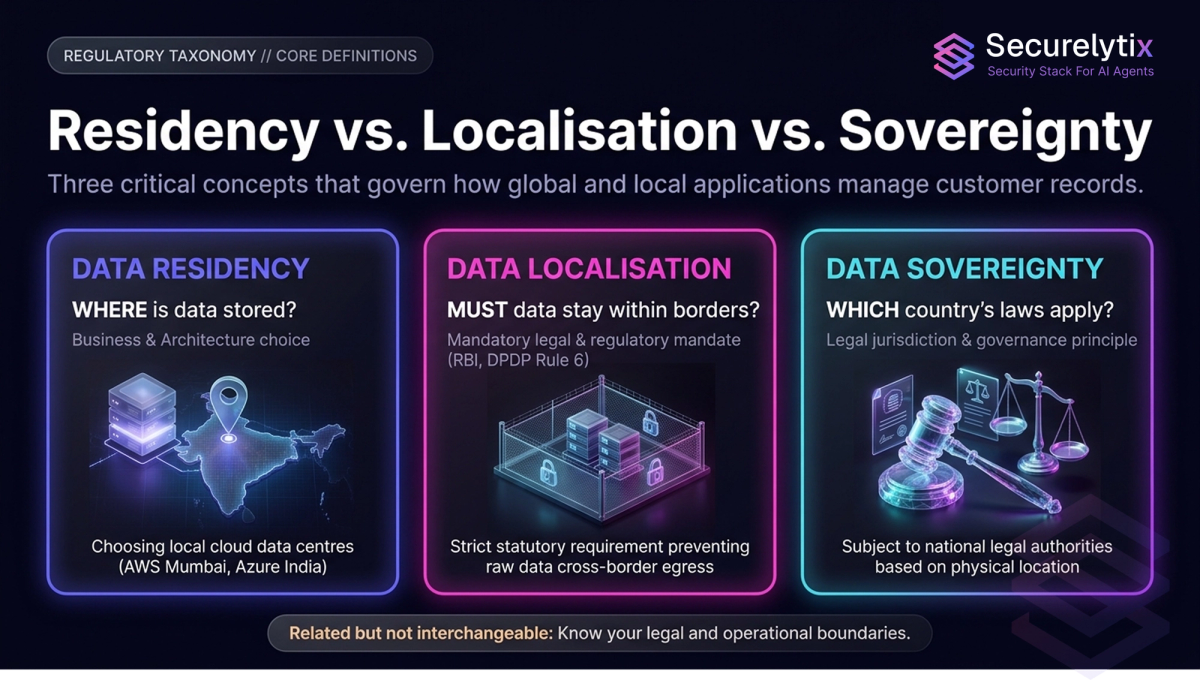
Data residency refers to the physical or geographical location where an organisation's data is stored. It determines the country or region in which data resides, whether on local servers, private infrastructure, or cloud platforms.
For example, an Indian company might choose to store its customer information in data centres located in India rather than in another country.
Data residency is particularly important for businesses that handle sensitive customer information, financial records, healthcare data, or personally identifiable information (PII).
It helps organisations understand where their data is located and manage their responsibilities under applicable data protection regulations.
How Does Data Residency Work?
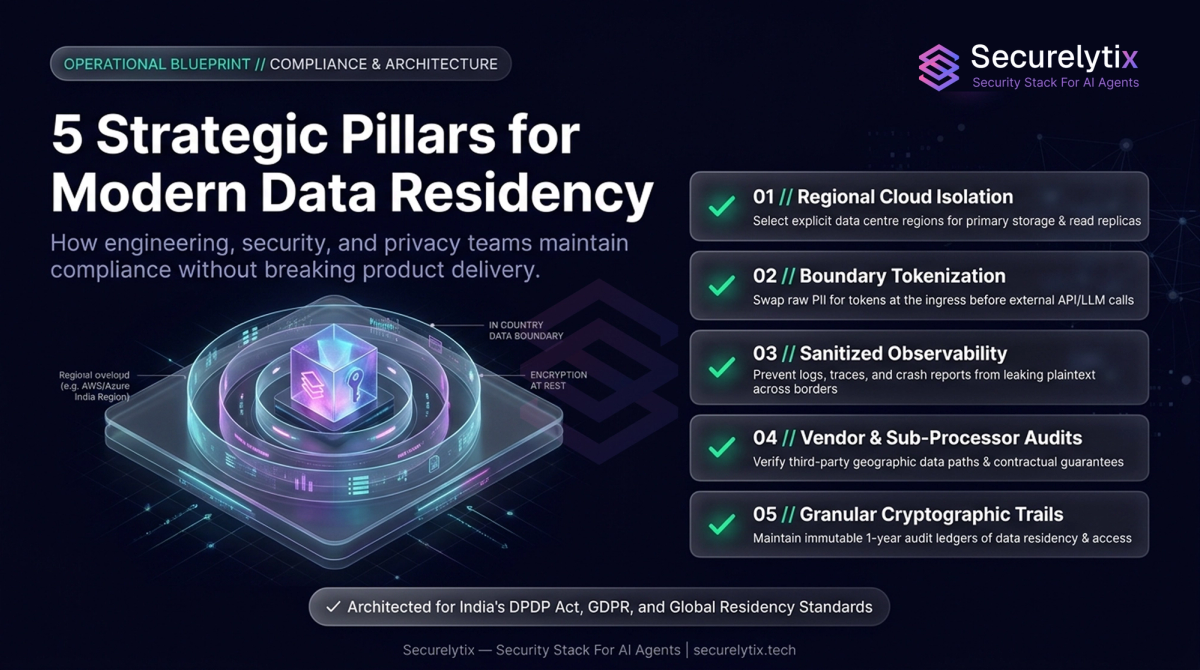
Data residency works by allowing organisations to choose the geographical location where their data is stored. This is usually managed through cloud service providers, local data centres, or an organisation's own infrastructure.
For example, when a business uses a cloud platform such as AWS, Microsoft Azure, or Google Cloud, it can select a specific geographical region for storing its data.
Here is how it works:
- Choosing a Region: A business selects the country or region where it wants its data to be stored.
- Data Storage: The cloud provider stores the information in data centres located within the selected region.
- Data Management: The organisation manages access, security, backups, and data processing according to its requirements.
- Regulatory Compliance: The business checks whether its data storage and transfer practices meet applicable legal and regulatory requirements.
Example of Data Residency
Imagine an Indian fintech company that collects customer details such as names, phone numbers, PAN information, and transaction records.
The company decides to use a cloud provider with data centres in India and selects an Indian region to store its customer database.
This means the company's data is stored within India, helping it meet relevant data storage requirements where applicable.
However, storing data in a particular country does not automatically mean that all data processing, backups, or third-party transfers also happen there. Businesses need to understand where their data travels and how different systems handle it.
Why Is Data Residency Important for Businesses?
Data residency is important because businesses today collect and process information across multiple platforms, cloud environments, and third-party services. Knowing where this data is stored helps organisations manage security, privacy, and regulatory responsibilities.
Here are some key reasons why data residency matters:
1. Regulatory Requirements
Different countries have different data protection laws that may place conditions on how personal information is stored and transferred.
For example, India's Digital Personal Data Protection (DPDP) Act, 2023, regulates the processing of digital personal data. Certain categories of data may also be subject to additional sector-specific requirements.
Understanding data residency helps businesses identify which rules may apply to their data.
2. Better Data Privacy
When businesses know where their data is stored, they can better understand who may access it and which data protection requirements apply.
This is particularly important when handling sensitive information such as financial records, healthcare details, and customer identities.
3. Improved Security Management
Storing data across multiple countries and cloud environments can make security management more complex.
Having clear data residency policies helps organisations manage their storage locations, access permissions, backups, and security controls more effectively.
4. Customer Trust
Customers want to know how their personal information is handled and protected.
Being transparent about where customer data is stored can help businesses build trust, especially in industries such as banking, healthcare, and financial services.
5. Better Control Over Data
Data residency gives organisations better visibility into where their information is stored.
This becomes useful when businesses work with multiple cloud providers, third-party vendors, APIs, and AI platforms that may process or store information in different geographical locations.
Data Residency in Cloud Computing
Cloud computing has made it easier for businesses to store and access data without maintaining their own physical servers. However, cloud storage also raises an important question: Where is the data actually stored?
Cloud service providers such as Amazon Web Services (AWS), Microsoft Azure, and Google Cloud operate data centres across multiple countries and geographical regions.
These providers allow businesses to select specific regions for storing their data based on their operational and regulatory requirements.
How Do Cloud Regions Work?
A cloud region is a geographical area where a cloud provider operates multiple data centres. Businesses can select a region when setting up their cloud infrastructure.
For example:
- AWS: Allows businesses to select regions such as Mumbai, Singapore, and Frankfurt.
- Microsoft Azure: Provides regional infrastructure across countries, including India, the United States, and the United Kingdom.
- Google Cloud: Offers multiple cloud regions, allowing businesses to choose where their workloads and data are hosted.
Why Does This Matter?
Imagine a healthcare company in India storing patient records on a cloud platform.
If the company selects an Indian cloud region, its primary data storage can remain within India. However, if backups, logs, analytics, or third-party services operate in other regions, some information may still be transferred outside the country.
This is why selecting a cloud region is only one part of managing data residency.
Businesses must also understand how data moves between applications, databases, APIs, backup systems, and external services.
Data Residency vs. Data Localisation vs. Data Sovereignty
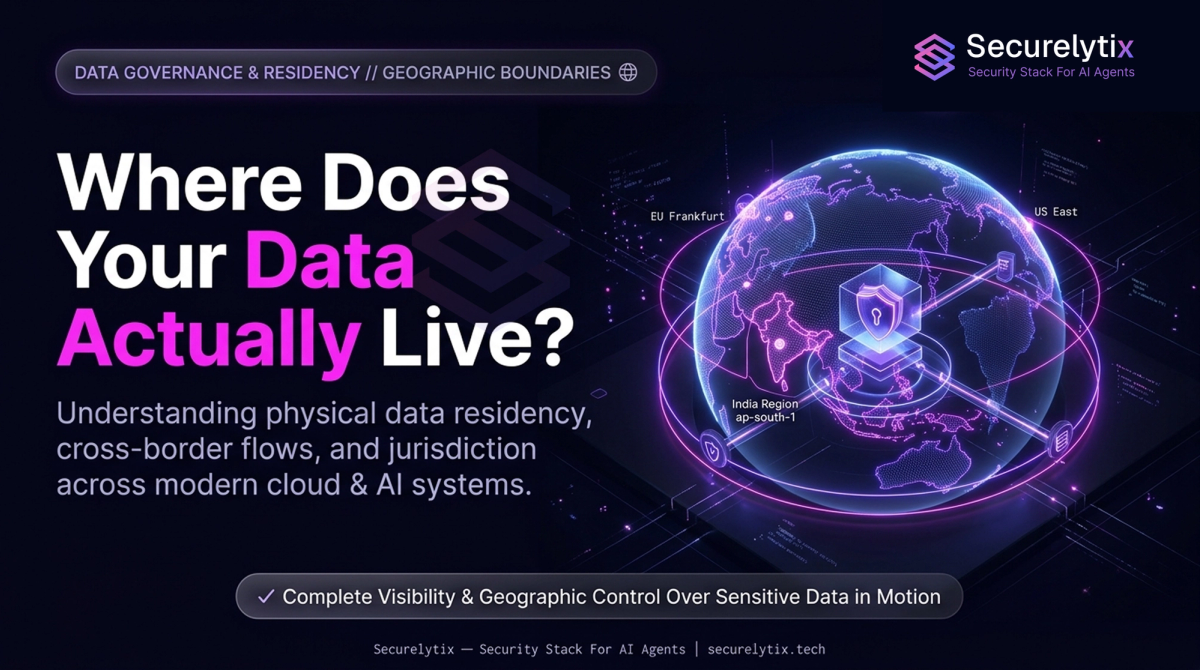
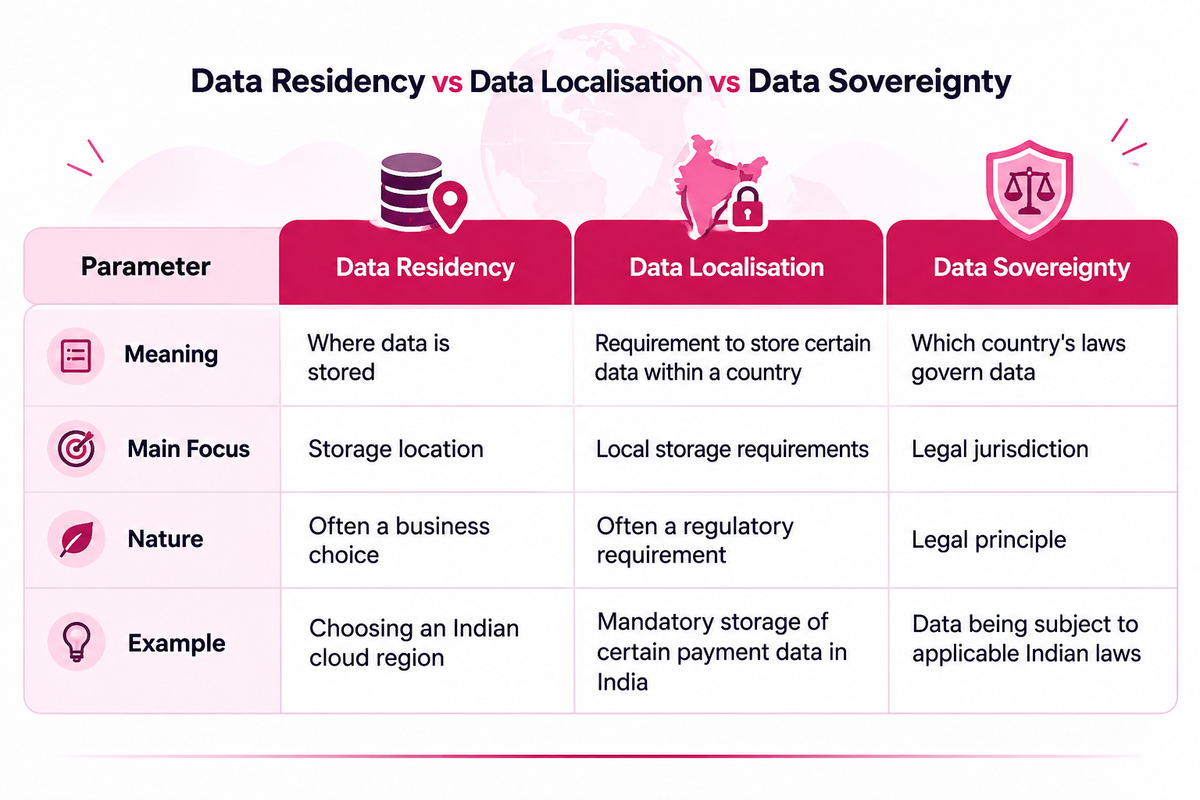
Data residency, data localisation, and data sovereignty are often used together when discussing data privacy and security. However, they have different meanings.
Understanding these differences helps businesses make better decisions about where they store data, how they manage it, and which regulations apply.
1. Data Residency
Data residency refers to the geographical location where an organisation's data is physically stored.
For example, an Indian company may choose to store its customer information in data centres located in India, even if it uses a global cloud service provider.
2. Data Localisation
Data localisation refers to legal or regulatory requirements that require certain types of data to be stored within a specific country's borders.
For example, certain financial data handled by payment system providers in India is subject to RBI's payment data storage requirements.
Unlike general data residency choices, data localisation requirements may be legally mandatory for specific categories of data.
3. Data Sovereignty
Data sovereignty refers to the idea that data is subject to the laws and regulations of the country or jurisdiction where it is located or otherwise legally governed.
For example, data stored in a particular country may be subject to that country's legal requirements, depending on the applicable laws and circumstances.
Key Differences
Data Residency Challenges for Businesses
Managing data residency can become challenging as businesses increasingly rely on cloud platforms, third-party vendors, APIs, and AI applications.
Even if a company stores its primary database in one country, its data may travel across multiple systems and locations during everyday operations.
Here are some common challenges businesses face:
1. Managing Multiple Cloud Environments
Many organisations use multiple cloud providers or operate across different geographical regions. This makes it difficult to track exactly where their data is stored, backed up, and processed.
Without proper visibility, businesses may struggle to maintain consistent data storage policies.
2. Third-Party Data Transfers
Businesses often share information with payment gateways, analytics platforms, CRM systems, and other external services.
These services may process or store data in different countries, creating additional challenges around data transfers and regulatory requirements.
3. Data Backups and Replication
Cloud providers may offer backup and replication features to protect against data loss.
However, businesses need to understand where these backups are stored and whether replication takes place across geographical regions.
4. AI and Third-Party API Integrations
As businesses adopt AI tools, they increasingly send information to external models, APIs, and AI agents.
For example, an application might send customer information to an external AI model to generate a response or analyse a document.
Even when the original database is hosted locally, sensitive information may move outside the organisation's infrastructure during these interactions.
5. Regulatory Complexity
Different industries and countries have different requirements for data storage, processing, and cross-border transfers.
Conclusion
Data residency has become an important consideration for businesses that collect, store, and process personal information. Knowing where data is stored helps organisations understand their regulatory responsibilities, manage security risks, and make informed decisions about their cloud infrastructure.
However, choosing the right storage location is only one part of data protection. Businesses must also understand how sensitive information moves between applications, databases, APIs, third-party services, and AI platforms.
As technology continues to evolve, organisations need to focus not only on where their data is stored but also on how it is accessed, shared, and protected throughout its lifecycle.
Protecting data requires visibility and control at every stage, not just at the storage level
FAQ
Want to tokenize sensitive data before it reaches your AI stack?
Talk to Securelytix →